
New Year’s resolutions never held much interest for me. Resolutions did not seem to comport with my sense of being Jewish. They are aligned with a secular New Year and have no component of guilt or repentance. Yet, when juxtaposed with the opening chapters of Exodus, it becomes clear that New Year’s resolutions can be a Jewish exercise because they express our belief that we can have a better life.
As Exodus begins, we encounter the radical idea that an enslaved people could believe in a better future. There were earlier acts of defiance, such as the Hebrew midwives who refused Pharaoh’s order to kill Israelite babies or Moses’ mother placing him in a raft and sending her son to an uncertain future. But defiance was only an accommodation to the viciousness of slavery.
Moses nurtured the belief that we can create a better world. Through his encounter with God, Moses came to believe, and to demonstrate, that all Jews could have a different future, one in which they would live free from slavery and degradation. He transformed resistance into rebellion.
Fast forward to this century. Advances in science, democratic values, and spirituality have shifted our stance from believing that freedom is available to assuming that it is guaranteed. Just as we presume medicine will cure our ills and demand free, quality education for our children, we expect the government to protect our rights. Most poignantly, Jews have come to expect that the world will honor freedom of speech, religion, and assembly, an expectation that is fraught and sometimes at odds with Jewish historical experience.
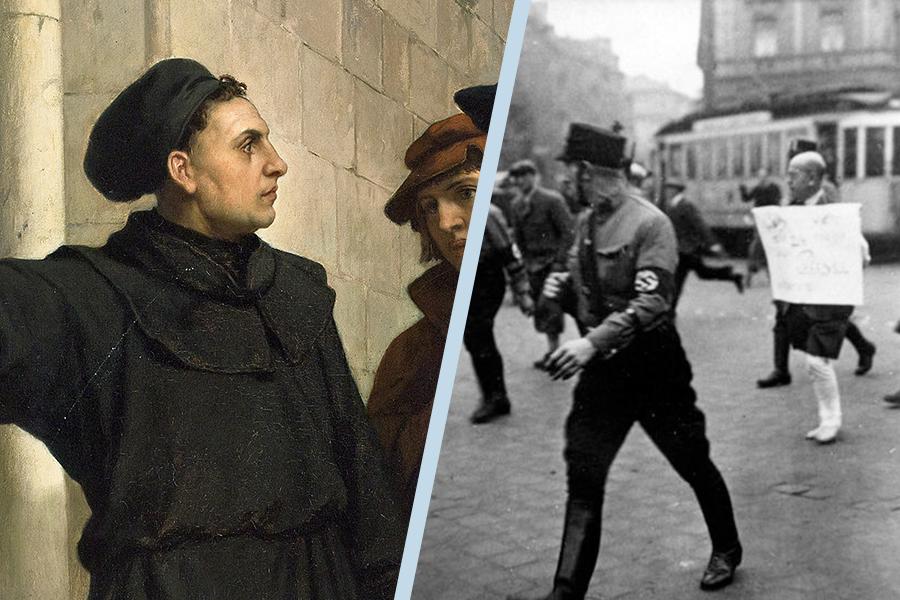
A long history of hatred
Jews long ago learned to balance belief in essential freedoms with a persistent fear of anti-democratic forces. Inquisitors, fascists, extremists, cossacks, jihadists, and racists have jolted the collective Jewish psyche into a guarded posture. The expectation of secure, protected freedom has been undercut by a history of a world despoiled by hate, with antisemitism as the prime example. For some Jews, belief in a better world has yielded to an expectation of aggression.
The lesson of the Exodus story is that we can dare to make resolutions that imagine better lives and a better world. The lesson of history is that we cannot always expect the world to protect the very freedoms that make a better world possible. Therefore, our resolutions must always strive to nurture belief while tempering expectations, holding hope and realism together in creative tension.
Rabbi Evan J. Krame
If this reflection resonates with you, consider sharing it on social media—or simply take a moment to reflect on how you can create a better community.