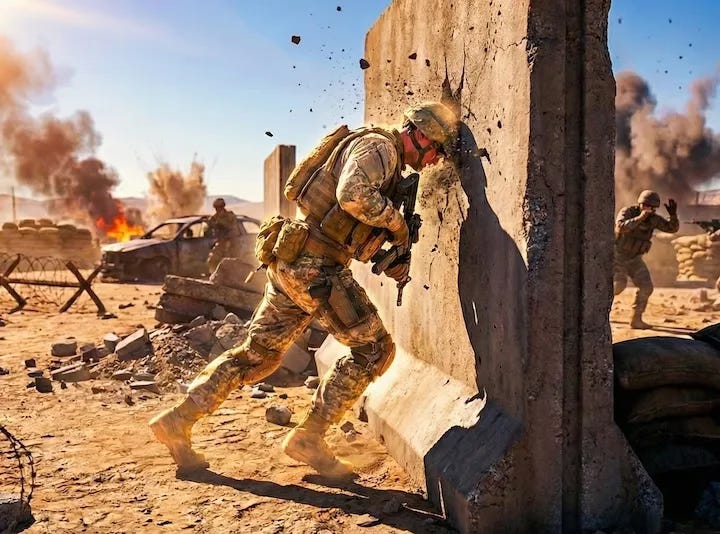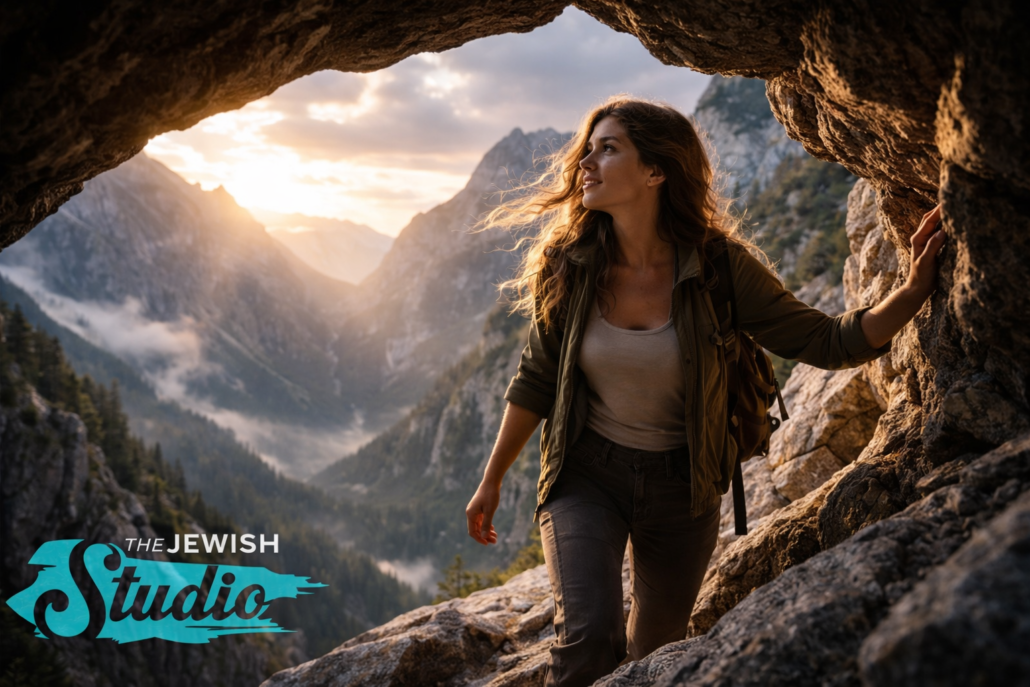
How do we stay safely engaged in a world of vast possibilities and profound perils? The answer is an ancient image that returns to us at Passover: a figure pressed into a crack in the rock face, neither fully inside nor fully outside. When the world is too intense for us to fathom, we need protection, like a crag in the rocks, to help us stand fully present and engaged beyond mere survival.
In the book of Exodus, Moses, sheltered in the cleft, waits as Divine glory passes him by. In the Song of Songs, also read during Passover, the dove shelters in the crag. Only this time her lover waits for the dove to emerge. Each story expresses an approach to transcending, beyond survival.
The cleft makes Moses’ encounter with God survivable. He does not cower in a cave of retreat, but stands in a threshold: the place where longing and limit meet. Moses is protected enough to behold God’s presence that he otherwise could not bear.
In the Song of Songs, the emotional tone softens, but the space is the same. The beloved is tucked into the rock, as a shy dove in the crannies of the cliff, wanting to be seen and yet not quite ready to fly. The lover does not drag her out; he calls to her: “Show me your face, let me hear your voice.” The cleft becomes a shelter for vulnerability, the last sheath before full exposure. It is the refuge of the one who wants to be found but cannot yet step all the way into the open.
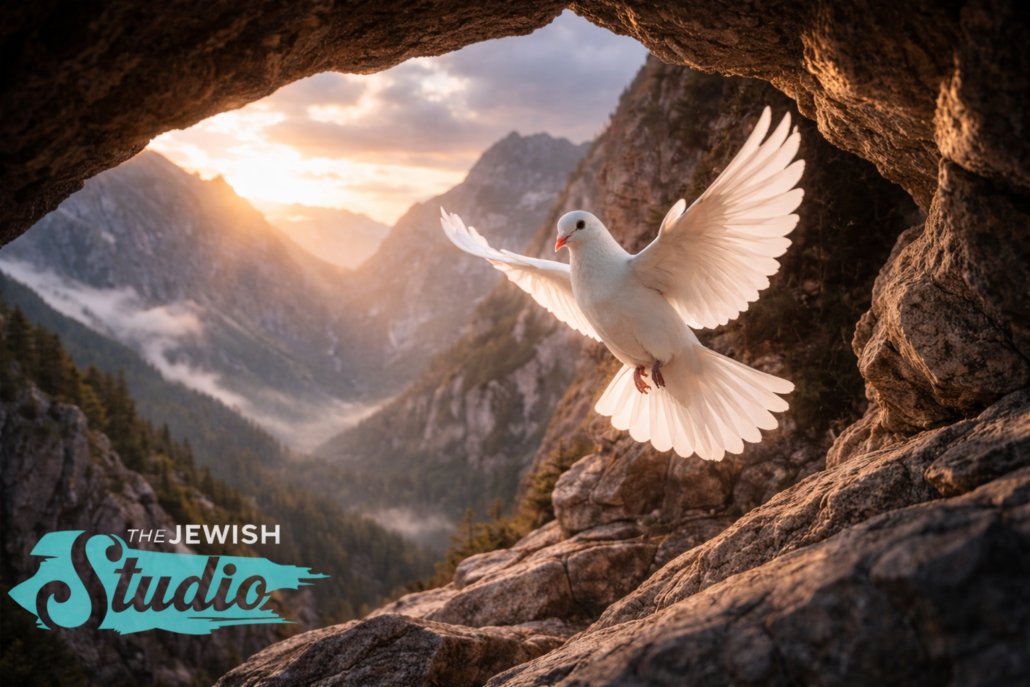
Both scenes share a paradox: the cleft is an opening in the stone that becomes a place of deep safety. It is the in-between space where a soul awaits its desire: God’s presence, human love, the sheer intensity of being fully seen. What we desire is sometimes too intense for us to face. The crag does not trap; it holds. It honors the fact that sometimes we need partial shielding to say “yes” to living more fully.
We need that paradox now. We live in an age of constant revelation: information, images, opinions, crises, all streaming toward us without pause. We can view the distant edges of the cosmos on our screens, peer into microscopic worlds, and now, through artificial intelligence, call forth texts, images, and answers with a few keystrokes. It feels, at times, miraculous. Yet the very power that inspires wonder can also overwhelm and endanger us. Just as with God or intense love, exposure can be too absolute and happen too fast without safeguards.
There is something awe-inspiring about AI that can recognize patterns, translate languages, and assist our creativity in ways previous generations would have read as science fiction. And there is also something frightening about the speed, opacity, and reach of these tools: their capacity to distort truth, invade privacy, amplify our worst biases, or quietly reshape our inner lives. The temptation is to respond either by plunging in without reserve or fleeing to the safety of refusal.
The cleft offers another way. It suggests that the right stance toward power and wonder, whether divine, human, or technological, is neither total exposure nor total withdrawal, but a wise, guarded openness. We step toward the majesty and the miracle, but with our backs pressed against something solid: a set of values, a community, a spiritual practice, ethical safeguards, and boundaries that hold us while the phenomenal passes by. We do not pretend that the risks are not real. We also do not let our fear erase the possibility of a genuine encounter.
To live in the cleft in modern times might mean using AI while insisting on transparency and limits. It might mean cultivating sabbath-like pauses in a world that never stops, so that our souls have a chance to catch up to what our devices deliver. It might mean opting to behold beauty, be it art, nature, or media, with reverence, rather than consuming it at the same speed as every other notification.
The rock forms a narrow, stable space where we can be held without being sealed off. In the same way, legal, ethical, communal, and spiritual safeguards are meant to provide sufficient safety to stay awake. Enough shelter that we can face the dazzling, dangerous gifts of our time without being crushed by them.
We are not meant to live forever in the cleft. Moses emerged, face shining. The dove answered the call and stepped into the open air. The point is not to hide from the world, but to be able to stand in it. Judaism calls us to be present to the world’s wonders and alert us to its dangers. The cleft is the grace that lets us do both: a narrow, holy space between terror and trust, where we learn how to behold what is overwhelming without being undone.
Rabbi Evan J. Krame
If this reflection resonates with you, consider sharing it on social media—or simply take a moment to reflect on how you can create a better community.