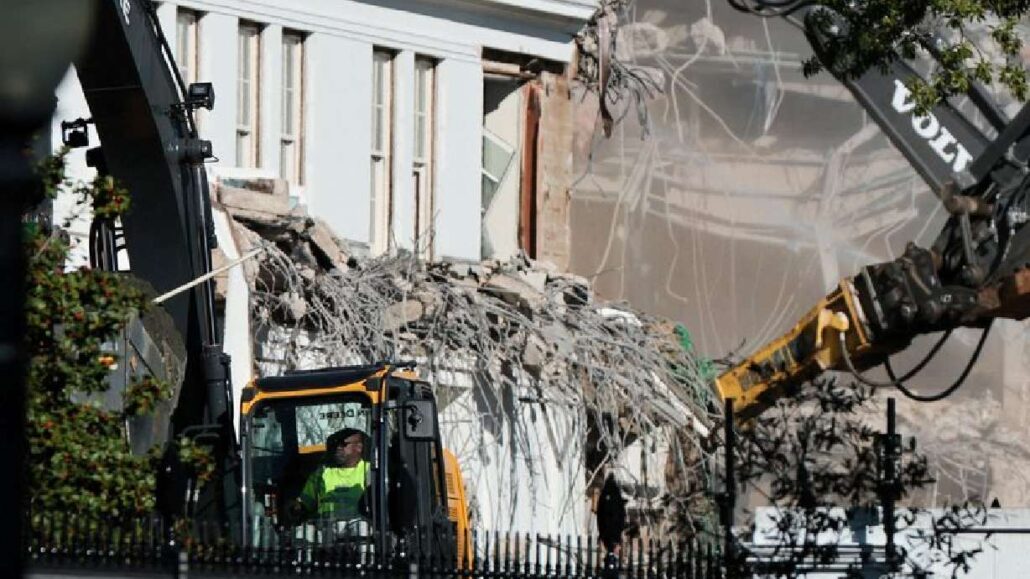
A grand ballroom added to a seat of power can be framed as hospitality or as vanity. A detention center can be defended as an act of enforcement or exposed as an expression of indifference to human dignity. Steel and drywall are morally neutral. Architecture is not. Whether building ballrooms or detention centers, the architect’s training must begin with holy instruction.
The outrage at the construction of a ballroom at the White House or a detention center for immigrants reflects our own moral guidance. We should care not only what the government builds, but why and how they build it: with obedience, intention, and moral courage beginning before the very first line on the blueprint.
Every construction begins with a why. In the Torah, Exodus 27:8 insists that the why comes first. “Make it hollow with boards; as it was shown you on the mountain, so shall they make it.” (Exodus 27:8). Why begins on the mountain, where God gave us our moral bearing.
On the Mountain: Purpose Before Process
On the mountain, before there is a worksite, before there are craftsmen or materials, God gives Moses a pattern. “As it was shown you on the mountain, so shall they make it.”
That is the moment of holy anchoring. Before anyone lifts a hammer, the project is rooted in covenant. The altar exists for worship. The Mishkan exists for Presence. The structure is not a monument to Israel’s creativity or the glory of its leaders; it is a dwelling place shaped by divine instruction.
The mountain answers the first and most important question: Are we building for the right purpose? Only after that question is settled should the work begin.
Later, when the people construct the Mishkan, they do not start from inspiration or innovation. They return to what was revealed. Every board, ring, pole, and layer of bronze becomes a lived decision: Will we keep faith with the pattern that came in the cloud, or will we do what seems right in our own eyes?
That tension never disappears. It simply moves from Sinai to the job site.
The Hollow Altar: A Spiritual Detail
The instruction to make the altar “hollow with boards” sounds technical. But it carries spiritual weight.
The altar was not a solid stone monument. It was framed, portable, and able to travel with the people. The altar’s portability indicates that worship was not meant to be fixed in one place or tied to honoring its construction crew. The altar demonstrates that obedience to a Higher purposes moves with us, always.
The craftsman shaping that frame was not merely constructing a religious object. He was embodying faith in a higher purpose. God’s direction governs all of our choices in how we perform our jobs.
The detail matters because intention matters. The altar exists for God’s purposes, not for national pride, not for aesthetic triumph, not for political leverage. The right structure flows from the right instruction.
When We Skip the Mountain
If we rush straight to the worksite without first remembering what was taught on the mountain, we may build efficiently but not righteously.

History is full of impressive structures born of distorted intention. Triumphal arches lacking in humility. Security walls without compassion. Expansion of detention centers without justice. These are projects justified by urgency that never paused to ask whether the purpose aligned with holiness.
A detention center can meet every code requirement and still violate the deeper code of human dignity. An addition to a government building can be architecturally magnificent and spiritually hollow.
Exodus will not let us hide behind technical excellence. God did not say merely, “Build it well.” He said, “Build it as I showed you.” When mission shapes method, construction becomes covenantal.
If we remain on the mountain forever, we have beautiful ideals and no shelter. If we descend without the mountain, we have structures without sanctity. Exodus 27:8 presses a quiet but penetrating question beneath every endeavor: Whose pattern are you building from?
Is your company structured by profit alone, or by justice and service?
Is your policy shaped by fear, or by covenantal responsibility?
Is your home organized around consumption, or around hospitality?
Is your leadership born of ego, or of stewardship?
We must prioritize moral courage, not just technical competence. Then, when we raise the dust and noise of construction, we carry a holy cloud with us, so that what we build does not merely stand. It witnesses.
Rabbi Evan J. Krame
If this reflection resonates with you, consider sharing it on social media—or simply take a moment to reflect on how you can create a better community.