
Mark Twain famously said, “Do not complain about growing old. It is a privilege denied to many.” That quote alone is proof that Mark Twain was not Jewish. Our tradition, going back to the Torah itself, is practically an exposé on aging with angst. The Torah might say, “Growing old? It’s a privilege to complain about it.” Aging often comes with a lot of raging. It’s enough to wake me up at 4 a.m., the hour at which I wrote this.
Dylan Thomas, born shortly after Mark Twain’s death, struck a more biblical tone in his poem “Do not go gentle into that good night, rage, rage against the dying of the light.”
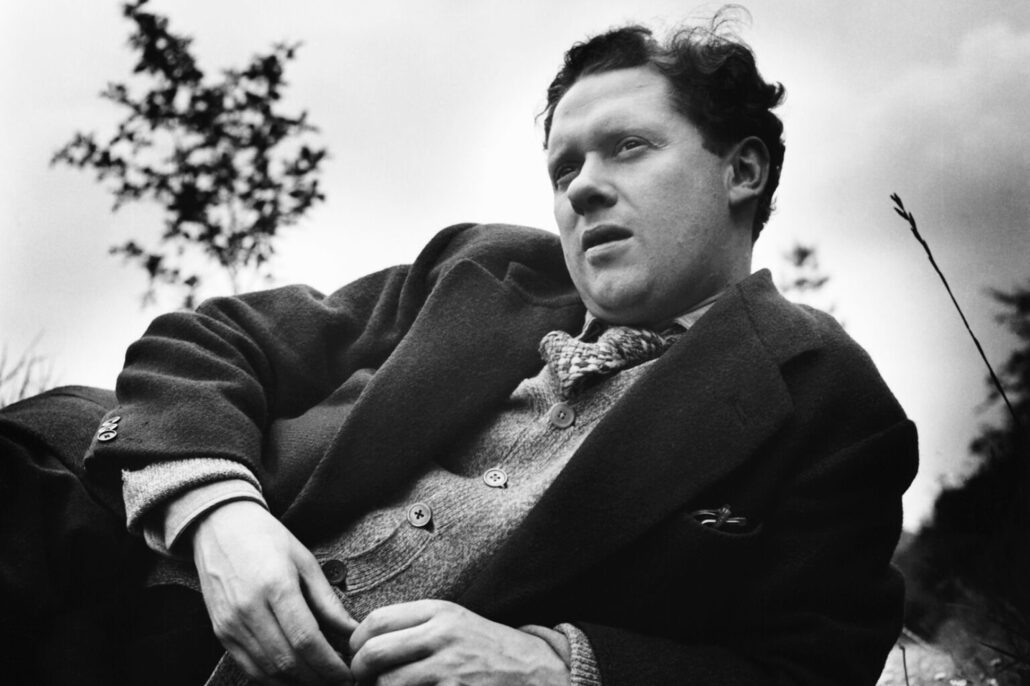
Poet Dylan Thomas
“Do not go gentle into that good night “
In Parshat Vayigash, Joseph tests his brothers before revealing his identity. Among the burdens the siblings carry in Egypt is the toll the unfolding drama may take on their elderly father. Joseph demands that the youngest brother, Benjamin, be detained. Benjamin is the only child upon whom the elderly Jacob dotes. The remaining minyan of brothers protests, arguing that further separation will surely kill their father. Spoiler alert: Jacob is nowhere near dying.
In equally dramatic fashion, Joseph sends the brothers back to fetch their father. When Jacob learns that Joseph is alive, he exclaims, “I must see him before I die.” When Joseph and Jacob finally reunite, Jacob declares, “Now I can die!” Spoiler alert: not yet.
Joseph presents Jacob to Pharaoh, and Jacob complains, “Few and difficult have been the years of my life.” He then bids Pharaoh a brisk farewell. Most people would have sought permission before leaving the company of the most powerful man in the world. Empowered by old age, Jacob bolts from the royal presence without consent and outside the bounds of convention.
Jacob lived another seventeen years in Egypt. His family is safe, ensconced in Goshen, a Cairo suburb. Still, he has not found his moment of Zen. Instead, Jacob sets the stage for future generations to complain about death and protest the dying of the light. He will neither go gently nor gracefully.
This tension echoes in 21st-century pop psychology. Countless self-help books portray aging as climbing a mountain or a fount of accumulated wisdom. Yet, the original self-help book, the Torah, recognized that most of us will rage against aging and bemoan our fates, even if we are privileged to move into the finest adult residences in the best suburbs.
What’s more, our cries about aging will inevitably cause anxiety in our children. Proof: I am writing this at 4 a.m., worrying about moving my own 93-year-old mother into assisted living. To most people, she appears resigned to her fate. To family, she saves her rage against the dying of the light and shares it freely with us. Her youthful spirit has not caught up with the frailty of her body. As the only son, destined for empathy and shaped like a punching bag, I am the repository for my mom’s inner Dylan Thomas.
Complain if you must, Mom. The privilege of getting old is the ability to say whatever you want. We learned that from the Torah. And as a rabbi and dutiful son, I’ll honor the Torah – as much as it may “kill” me.
Rabbi Evan J. Krame
If this reflection resonates with you, consider sharing it on social media—or simply take a moment to reflect on how you can create a better community.