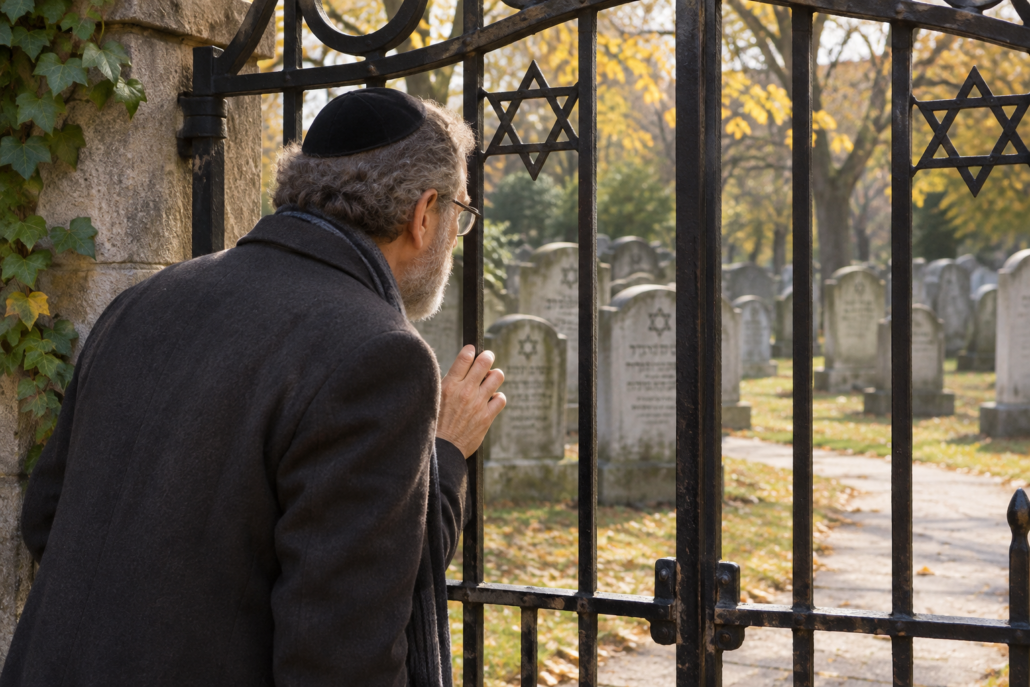
Jewish insecurity has deep roots, and some of them reach back to Abraham. His Hittite neighbors flatter him saying “You are the elect of God among us.” (Genesis 23:6). Alternatively, Abraham calls himself a ger v’toshav, a resident stranger. Perhaps both descriptions are accurate. He is respected, even celebrated. Yet when Sarah dies, he still has to negotiate for a permanent place in the terrain. The scene anticipates a question that has followed Jewish minority life ever since: how much security does the goodwill of our neighbors actually provide?
Look closely at the negotiation. The neighbors are happy to honor Abraham as a prince. But the rabbis see disaffection in the negotiations for a burial site. Perhaps, a prince can be admired from a respectful distance. A neighbor with a deed is here to stay.
Abraham understands this. Ephron seems to offer Abraham the cave of Machpelah as a gift. Abraham declines. Abraham dismisses flattery in favor of sincere negotiation. And Ephron then follows with a high sale price.
Any estate lawyer will tell you why Abraham insisted on paying full price for the land. A gift expresses goodwill, but a complete business transaction is an irrefutable and secure transfer.
Three thousand years later, we are still sorting out the tension between being honored and being secure.
Historian Pamela Nadell takes up that question in Antisemitism, an American Tradition. She traces the remarkable prosperity and advancement of American Jews, then shows how deeply antisemitism has nonetheless shaped their lives. Accomplishment and insecurity, it turns out, live at the same address.
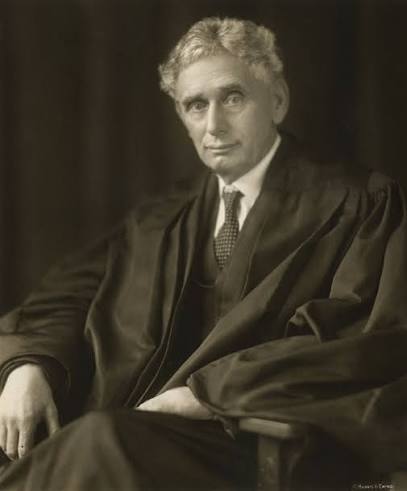
Successful American Jews have been accused of being both outsiders who cannot be fully trusted and insiders who possess too much power. The Supreme Court nomination of Justice Louis D. Brandeis, renowned for his brilliance as a lawyer, was challenged in the first ever public Senate hearing. Former President William Howard Taft described Brandeis as cunning, hypocritical, and possessing “much power for evil.” In similar fashion Justice Benjamin Cardozo, a widely respected Judge when nominated to the Supreme Court, faced suspicion that a Jewish justice might be incapable of representing the interests of non-Jewish Americans. Admiration does not necessarily produce acceptance. Today we have ten Jewish senators, but there is great doubt that we will soon have a Jewish President.
David Baddiel adds another layer in Jews Don’t Count: perceived elevation can make vulnerability harder to see. The stereotype of Jews as rich and privileged, he argues, seems to disqualify them from recognition as a vulnerable minority. Then he draws an essential distinction. Some Jews really are wealthy, but wealth has never protected anyone from antisemitism. His own grandparents owned a factory in Germany. It was taken from them, and many of his family died in the Shoah.
So others look at Jewish status and assume we are safely settled in America, while many Jews know that collective accomplishment guarantees nothing.
Dara Horn presses further in People Love Dead Jews. She describes the dehumanization that occurs when Jews are treated primarily as symbols. She argues that sympathy for Jews often depends on Jewish powerlessness. The Jew who suffers is mourned. The Jew who succeeds is suspect. Horn’s understanding is that Jewish status is precarious, while Jewish victimization is idealized.
Achievement, visibility, and admiration do not settle the question of belonging. Sometimes they create expectations of power that make Jewish vulnerability harder for others to see.
Abraham’s answer was neither to reject the compliment nor to rely on it. He accepted the honor graciously, then quietly insisted on a bill of sale. That may be the lesson for us as well.
We can be grateful for our neighbors’ goodwill without mistaking it for a guarantee of fair treatment. Jews remain standing in the public square, asking not to be flattered but to be treated fairly.
Rabbi Evan J. Krame
If this reflection resonates with you, consider sharing it on social media—or simply take a moment to reflect on how you can create a better community.