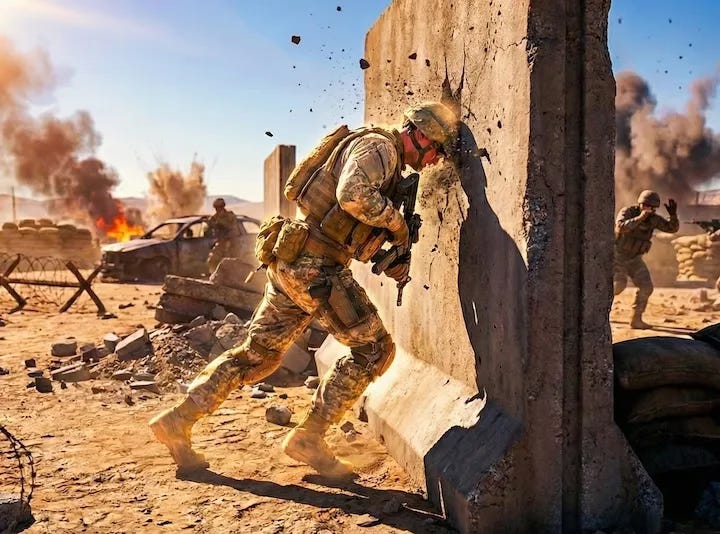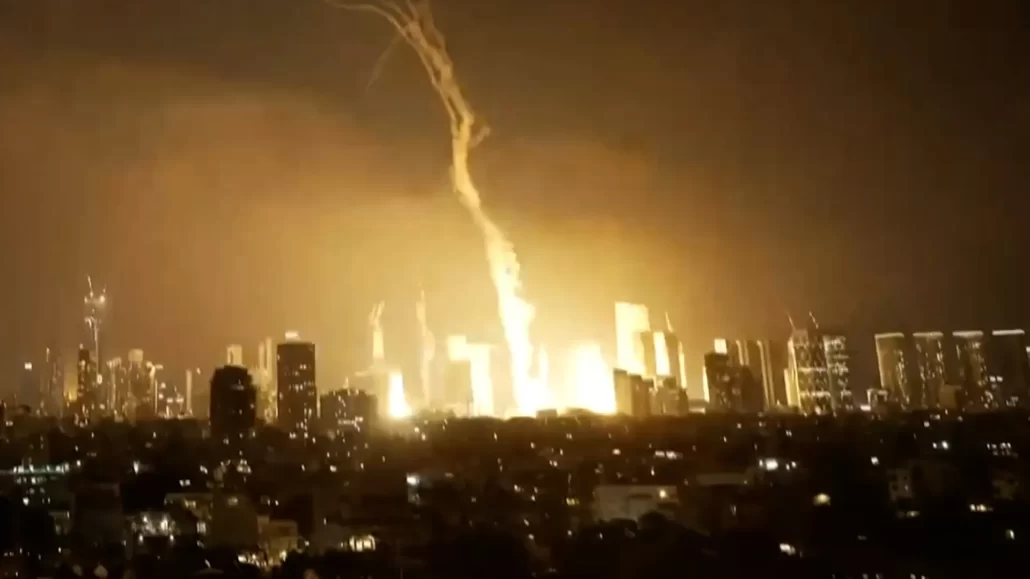
Israel and the United States again hit targets in Iran, killing the country’s Supreme Leader. Many of us feel the anguish that comes whenever the Middle East erupts in violence. In recent years, Israel has confronted and, in different ways, degraded threats from Hamas in Gaza, Hezbollah in Lebanon, and Iranian-backed forces in Syria. These are the modern “tribes” that openly declare their desire for Israel’s destruction. In the context of the Torah, are we fulfilling God’s directive as our Master of War?
For some, the attacks on Iran feel like survival tactics. For others, like escalation. For many, they feel like both. And in moments like this, Torah language echoes loudly: “The Lord is a man of war; the Lord is His name.” (Exodus 15:3)
Is our God a Master of War? Or is that only one face of many we see when Israel is threatened? That tension sharpens in Parashat Ki Tisa (Exodus 33–34). After the episode of the Golden Calf, God threatened the destruction of the Hebrews. Moses pleaded to save them. That episode was followed by a shaken Moses’ request for God to reveal God’s self. As God’s presence, or back, passes by, the Thirteen Attributes are revealed: “Compassionate and gracious, slow to anger, abundant in kindness and truth…”
Yet the compassionate God immediately shows the glint of divine weaponry. God then promises: “I will drive out the Canaanite, the Amorite, the Hittite, the Perizzite, the Hivite, and the Jebusite.” (Exodus 33:2; 34:11).
Anger and retribution. Mercy and expulsion. For the sake of God’s people, firepower is sanctioned. For the protection of God’s honor, reckoning is demanded.
Ki Tisa is read within days of the Purim holiday, sometimes even coinciding with Shabbat Zakhor, which precedes Purim. This past Saturday morning, our Torah reader ascended the bimah to offer the supplemental Torah reading of Shabbat Zakhor, which contains the commandment to remember and eliminate Amalek. The nation of Amalek was understood to be morally unredemable, demonstrated by their attack on a weakened Children of Israel as the Hebrews left Egypt. On the eve of Purim, a holiday understood to celebrate the triumph over a Persian version of Amalek, we chant the Torah’s directive to not merely remember but to destroy Amalek.
Before chanting, our reader reflected on the day’s tension. Her brief but heartfelt observation underscored the difficulty of our relationship with the God of compassion, who is also a Master of War.
Some could understand the attack on Iran as fulfilling the commandment to eliminate Amalek. Additionally, others recall from the Torah reading Ki Tisa God’s promise to eliminate the idol‑worshipping tribes: Canaanite, Amorite, Hittite, Perizzite, Hivite, and Jebusite. Is an attack on Iran fulfilling God’s directive?
Is our God both Master of War and driver of political processes? The Torah commands us to cleanse the world of Amalek, in its multiple formulations and emanations. And so we ask: when modern Israel eliminates existential threats, are we witnessing echoes of both Ki Tisa and Shabbat Zakhor? Are we projecting ancient certainty onto contemporary complexity?
Perhaps it is as Rashi explained: “man of war” does not mean that God delights in battle; it means God is master over war. This makes God sovereign over all peoples, even those who endanger other human beings. God appears to be the righteous inspiration for deadly exhibitions of power. Within Torah’s context, the Master of War sanctions violence as a response to be used only against nations like Iran that threaten Israel’s survival.
Maimonides insisted in the Guide for the Perplexed that such language is metaphorical. God has no sword, no rage, no literal combat; war imagery describes the defeat of oppression through providence. God is not a war deity. God is sovereign over history, moving us toward mercy, peace, and justice, even as we respond to the remnants of Amalek who persist in attacking and destroying.
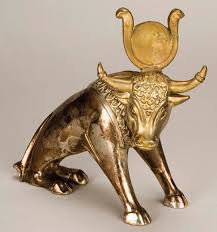
An ancient golden calf
The battle may not be against rogue and warlike nations alone. The other struggle we learn from Ki Tisa is to contain the idolatry of power itself. Even in the United States and Israel, we contend with the Golden Calf of believing that power comes through displays of force. With such abuse of power comes moral rot and the failure to honor the God who brings order and inspires goodness.
The God we should cleave to is the creator, the liberator, the just, and the merciful. Yet Isaiah’s vision, while emblazoned on the United Nations, has not yet been realized. We still await the day when “Nation shall not lift sword against nation.” (Isaiah 2:4)
War appears in Torah. But it is not God’s identity. War is only to be an episode within the arc of redemption, covenantal relationship, and security.
This past Shabbat Zakhor and the reading of parshat Ki Tisa offer multiple instructions. We obey the God of mercy, of covenant, and of justice. The Master of War reigns only when life is threatened by Amalek, both ancient and modern. Yet, the battle must not be for the sake of destruction, but to eliminate the idolatry of hatred and to create security for all people.
In that spirit, when we pray, we may begin with Israel’s security. Are we also mindful to pray for protection, justice, and mercy for the innocent civilians in Iran, in the West Bank, in Syria, and in Lebanon? They suffer as well at the hands of zealots, tyrants, and hatemongers.
Because our Master of War is also the God of justice and mercy, we must invoke that legacy even as bombs are exploding. We cannot let that essence of a merciful God pass by us, even if God may sometimes be the Master of War.
Rabbi Evan J. Krame
If this reflection resonates with you, consider sharing it on social media—or simply take a moment to reflect on how you can create a better community.