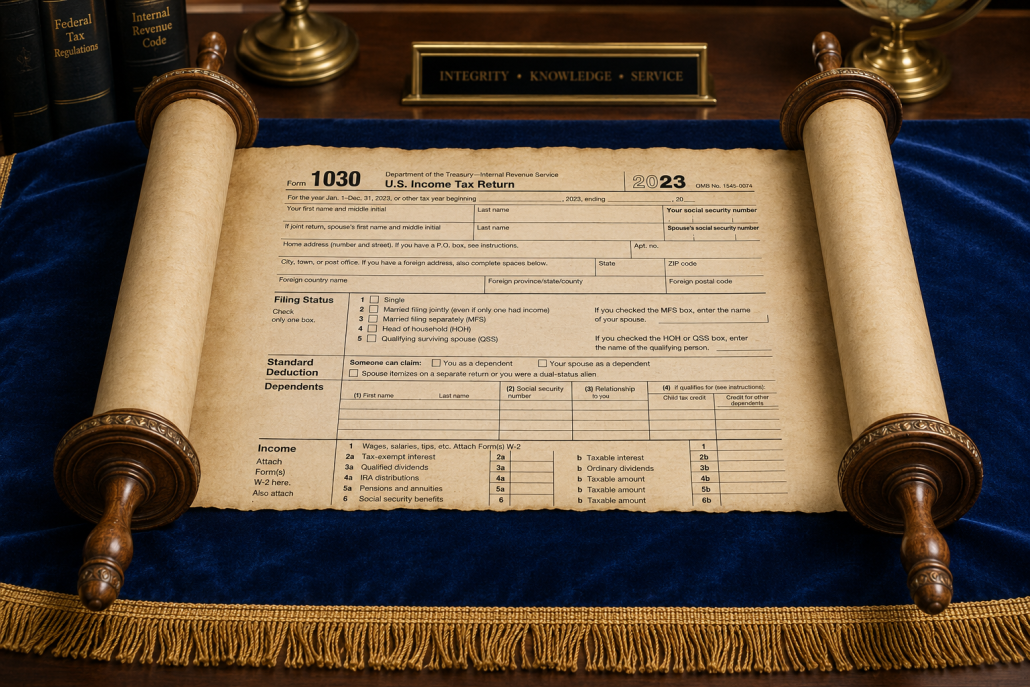
When I studied for my Master’s in Taxation, I never imagined I was undertaking a deep dive into Judaic thought. Yet now, reading Ki Tavo, the Torah portion that falls just two weeks before the New Year, I see the parallel. Could our system of taxation be both Jewish and American? Are taxes Jewish?
Ki Tavo opens with the command to share the first fruits of our harvest. Framed as tribute to God’s abundance, the directive is quickly followed by our obligation to sustain the Levite, the stranger, the widow, and the orphan.
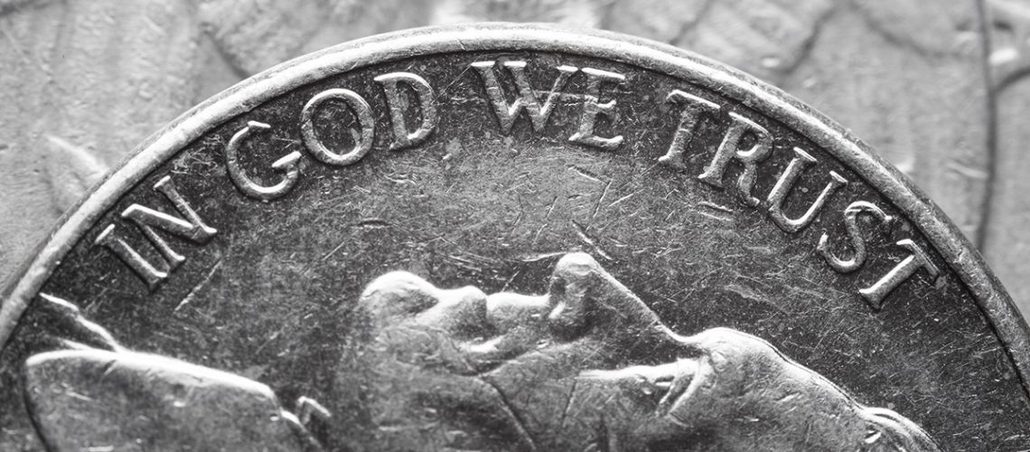
Can we understand paying taxes as a tribute to a free and fair society? Instead, we grumble at every payment. Sadly, our faith in the government that stamps “In God We Trust” on its coinage has not always been rewarded with our trust in return.
Not just today, but across the centuries, government has wasted money, served the powerful, and failed the stranger, the widow, and the orphan. Taxes aren’t exactly a welfare fund, but they are, as Justice Oliver Wendell Holmes Jr. put it, the price we pay for civilized society.
Our society doesn’t feel so civilized today.
To be fair, our Jeiwsh history has plenty of episodes where Jewish governance was marred by greed, waste, and disgrace. And I’m embarrassed by the Jewish oligarchs of America who support a corrupt and greed-driven administration. But the pendulum was always meant to swing back toward godliness. And Judaism ahs the corrective mechanisms. On Rosh Hashanah we invoke the formula: tefillah (prayer), tzedakah (charity), and teshuvah (repentance).
I want to believe my tax dollars embody all three. Like a prayer, taxes can be an expression of faith that our government will serve the greater good. I believe that a just society can be sustained if those dollars are meant to lift everyone in our society through protection, health care, food and shelter, if needed. And paying taxes on the wealth I’ve accumulated can be an honest admission: without a law requiring it, I might not share that wealth so freely. Taxes may be my teshuvah.
I’ll admit that framing taxes as an expression of Jewish values is a bit fanciful. But as I lament the state of our nation today, I’m keenly aware of the corrective measures we need to return to a more virtuous state. I’d like to believe that tefillah, tzedakah and teshuvah are the elements of that repair.
Perhaps, one day soon, I’ll feel differently about paying my tax dollars into the system, as an act of faith in a government that justly cares for every citizen, and as an effort to return to the values our founders first set forth.
Rabbi Evan J. Krame
If this reflection resonates with you, consider sharing it on social media—or simply take a moment to reflect on how you can create a better community.