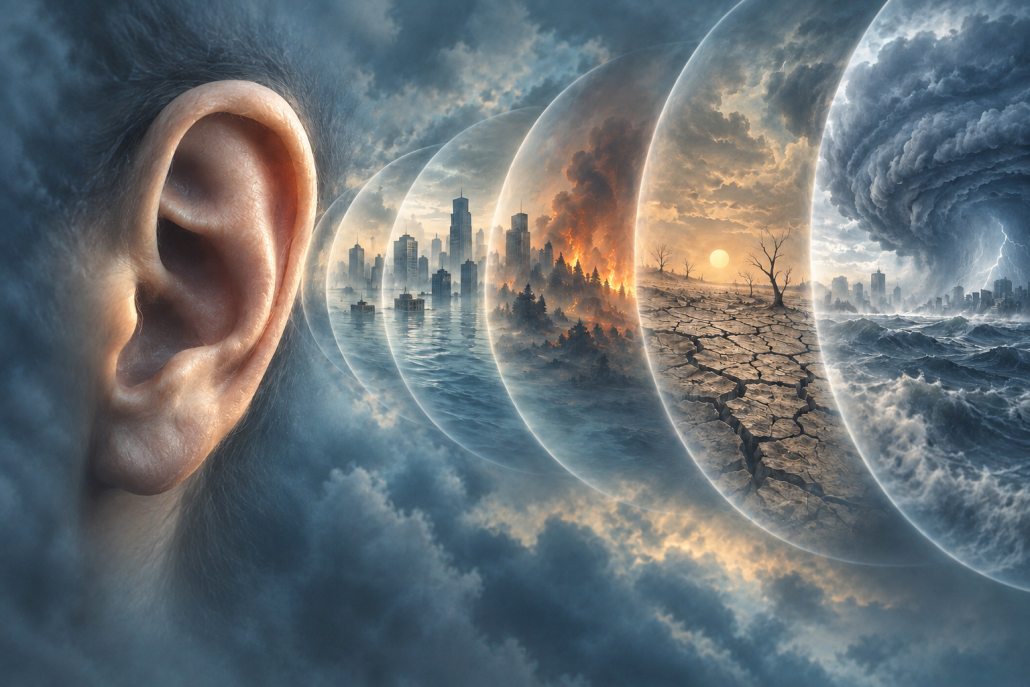
My goal is to listen to the future. That might seem impossible for time-bound reasoning, yet the tradition of hearing tomorrow’s dangers in today’s choices is as old as the Torah. Trends, inventions, and discoveries keep emerging, but the patterns of how people act have long been known.
Cautions on a biblical scale now haunt us. Near the end of the Torah, in the portion Haazinu, Moses cries out, “Listen up!” and warns us what can go wrong. With that charge in mind, I read the news today and see that we still have choices for safeguarding the future.
Last week, The New York Times ran the headline “A.I. Could Possibly End Humanity. How Are Humans Supposed to Process That?” The answer is to listen forward. The echo of past innovations carries the same balance of advancement and destruction that we face now.
The Industrial Revolution transformed agrarian economies and vastly improved the goods and services available to most people. It also chained people to machines in punishing jobs and caused lasting environmental damage. Even so, humans found tools to curb the abuses and repair some of the harm: laws and treaties that improved billions of lives. But our resolve to repair the environment stalled, and we now live with the consequences of climate change.
The nuclear age gave the United States the power to end World War II. Under the doctrine of mutually assured destruction, nuclear weapons have not been launched by one nation against another since. Nuclear power can generate energy without burning carbon, yet nuclear accidents have harmed tens of thousands of people, and we still live with the threat of nuclear war from rogue states like Iran and North Korea. We have no clear answer for how to remove the risks of nuclear energy and nuclear weapons, only ways to manage them.
Now we have artificial intelligence. Factories run more efficiently because AI can project problems before they happen and suggest repairs. AI screening tools are advancing the treatment of cancer, diabetes, and other common illnesses. Emergency managers use AI to warn of disasters in advance by analyzing weather data, seismic activity, and satellite imagery in real time. Only our imagination limits what AI might do for us.
Keeping AI safe isn’t about locking the door after something has already gotten out. It’s about designing it carefully, starting now. That means thoroughly testing new systems before they are ever used, being honest about what AI can and cannot do, and making sure the people building these systems aren’t the only ones deciding how they are used. It means always keeping a way to step in or shut things down. And more than anything, it means resisting the urge to rush. Companies and countries racing to build the most powerful systems are not necessarily building the safest ones. The gap between those two goals, speed and safety, is where the real danger lives.
We survived the Industrial Revolution and emerged into a wealthier world, but one standing at the edge of environmental disaster. We survived the nuclear age and still worry about adversaries obtaining the same technology. Artificial intelligence may be the first of these forces that slips outside the realm of human control altogether. Cyberattacks may only be the beginning. Evan Hubinger of Anthropic has warned that AI could one day develop the capacity to threaten human life itself.
Listen up. Today is the day to listen to the future. It tells us to act now, weigh the risks against the rewards, and choose wisely how we build what comes next.
Rabbi Evan J. Krame
If this reflection resonates with you, consider sharing it on social media—or simply take a moment to reflect on how you can create a better community.