In the world of estates and trusts, we imagine the worst and plan for it. What if a child dies before a parent? What if a beneficiary divorces, gets sued, or develops a gambling problem? Because we don’t know whether these disasters will ever happen, we perpetually wrestle in the dark. Still, the planning comforts clients, and that’s no small thing. A good plan lets them sleep at night.
Left to our own devices, we rarely sleep so well. We toss and turn, rehearsing confrontations that may never come and fights that may never start. Researchers at Penn State asked people with chronic anxiety to write down their worries and then check whether they came true. More than 91 percent never did. Of the few that did, about a third turned out better than expected.
Jacob would have made an excellent research subject.
The Plan
In this week’s portion, Vayishlach, Jacob learns that his brother Esau is coming to meet him with four hundred men. His fear is not irrational. Twenty years earlier, Esau swore to kill him. But Jacob knows how Esau felt twenty years ago. He has no idea how Esau feels today.
So Jacob does what any good estate planner would do: he plans for the worst case. He splits his camp in two so that half can escape if the other half is attacked. He sends gifts ahead in carefully spaced waves of goats, ewes, camels, cows, and donkeys. He even scripts what the servants will say. It is a thorough plan. It doesn’t help him sleep.
The Night
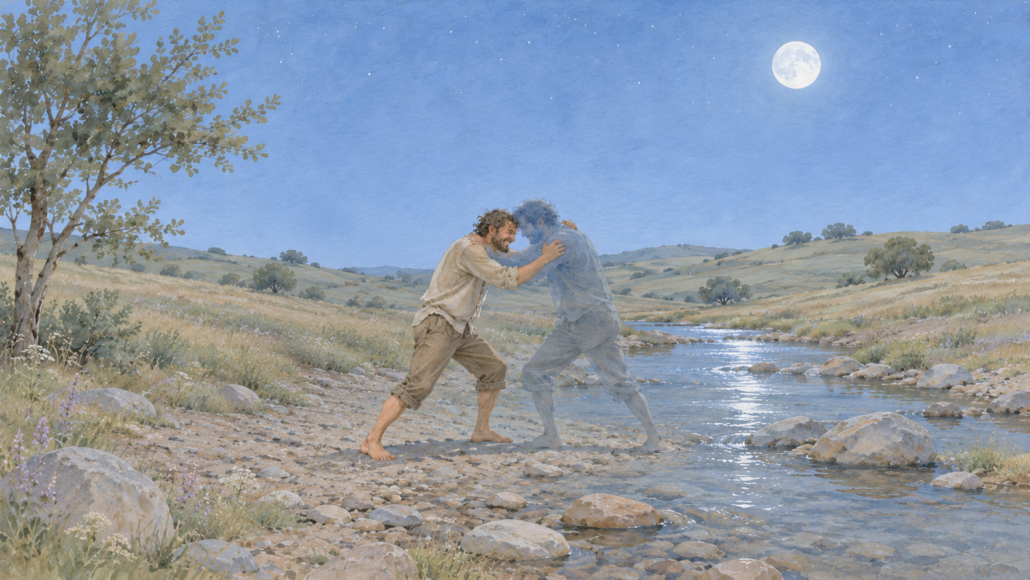
The family and the flocks cross the river, and Jacob is left alone. The Torah says a man wrestled with him until dawn (Genesis 32:25).
Commentators have long debated who this man was: an angel, Esau’s guardian spirit, or perhaps God. But anyone who has lain awake before a dreaded meeting will recognize another possibility. Jacob is wrestling with his own anxiety.
That is what fear feels like at 3 a.m. It has no face, and you can’t pin it down. It grabs you, you push back, and neither side lets go. In the dark, Jacob saw angels on a ladder. In the early morning, Jacob wrestled before reuniting with Esau. This time he has done all the planning a man can do. But planning doesn’t quiet the questioner.
Jacob holds on. As dawn breaks, he refuses to let go until his opponent blesses him. The blessing comes with a new name: “Your name shall no longer be Jacob, but Israel, for you have struggled with God and with men, and you have prevailed” (Genesis 32:29).
Read in the light of morning, that blessing is a preview. Before Jacob ever sees his brother’s face, he is assured that he can survive this. He limps away, because wrestling with fear costs us something even when we win. But he walks out in front of his family to meet Esau himself.
The Morning
And Esau runs to him, hugs him, and kisses him, and the two brothers weep (Genesis 33:4).
No ambush. No slaughter. No revenge. The divided camp, the waves of livestock, and the scripted speeches all prove unnecessary. The disaster Jacob spent the whole night fighting never arrives. Jacob joins the 91 percent.
Jacob even tells Esau that seeing his face is like seeing the face of God (Genesis 33:10). In the dark, he wrestled a faceless fear. In daylight, he looked into the face he had dreaded for twenty years and found that his brother was glad to see him.
Crossing the River
Jacob’s preparations were sensible, and so are yours. But don’t mistake the plan for the outcome, and don’t let a sleepless night tell you what morning will bring. The anxiety that wrestles us in the dark speaks with great confidence about things it cannot know. Most of the time, the confrontation we dread never comes.
So wrestle through the night if you must. Hold on until you get your blessing. Then cross the river in the morning. You might limp a little. But odds are better than nine in ten that the person you feared is running toward you.
Rabbi Evan J. Krame
If this reflection resonates with you, consider sharing it on social media—or simply take a moment to reflect on how you can create a better community.