This year, the Jewish calendar aligned with the Gregorian calendar in an unusual way. Rosh Hashanah 5787 began at sundown Friday night, September 11th, twenty-five years to the day since the two towers fell in Lower Manhattan. So, this morning, the first morning of the new year, we sit here on the twelfth, one day past that anniversary, contemplating what it means to be Jewish in 5787.
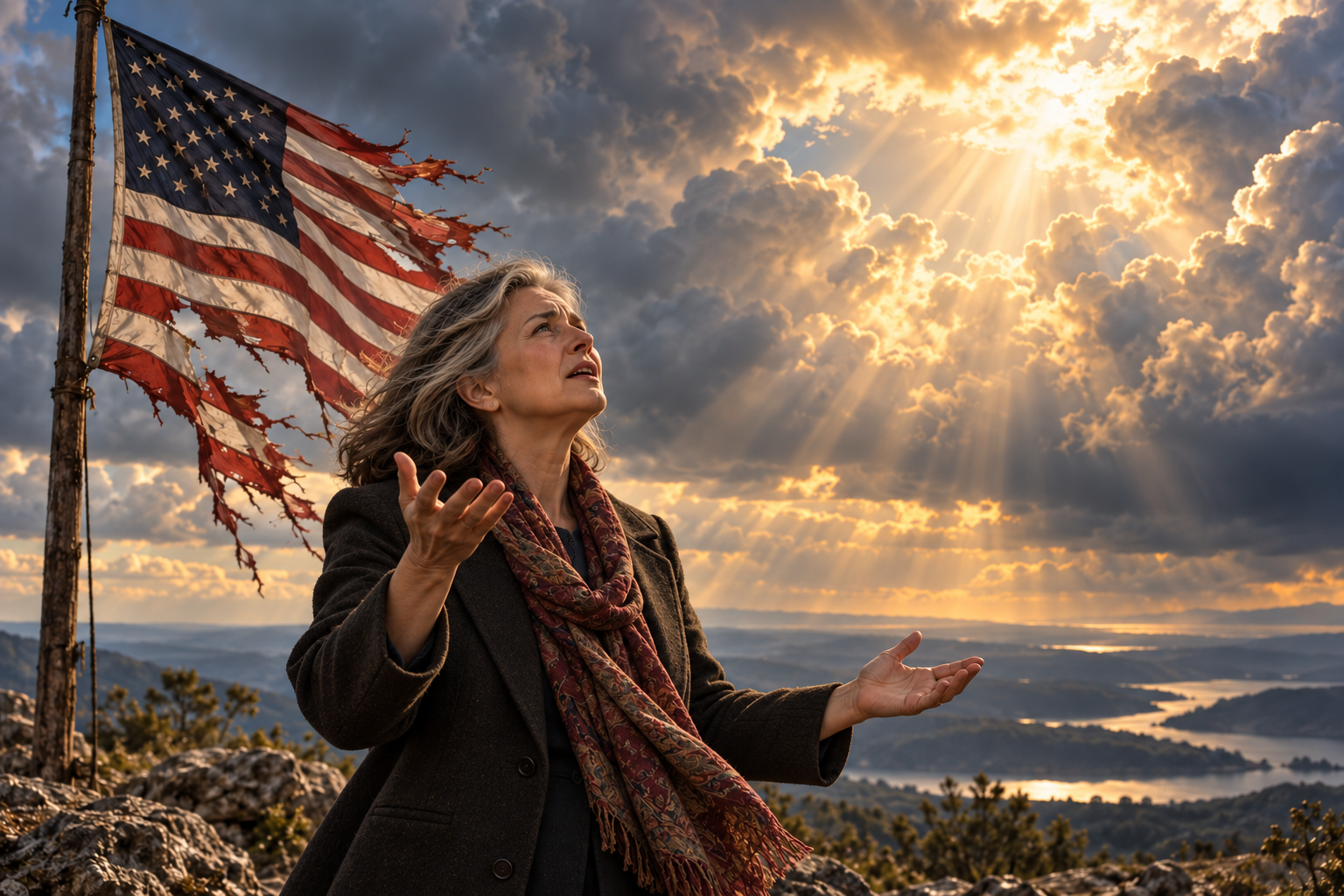
Rosh Hashanah is the day the Book of Life opens, a day for reckoning before renewal. September 11th carries that same weight for this country: less a celebration than a reckoning, a day we should be asking what was lost and what we’ve done with the twenty-five years since. I want to examine that reckoning. It has something to teach us about what happened between then and now, and about who we’re called to be as Jews in the year ahead.
Twenty-seven floors up in the North Tower, an Orthodox Jew named Abe Zelmanowitz sat beside his friend of twelve years, Ed Beyea, a disabled Catholic man who used a wheelchair. Ed’s aide was told to flee. Abe stayed on the stairwell landing. He would not leave his friend to face the fire alone. Hundreds of people passed through that stairwell, hurrying down. Abe chose to stay still. Abe and Ed died together, side by side, faith meeting faith.
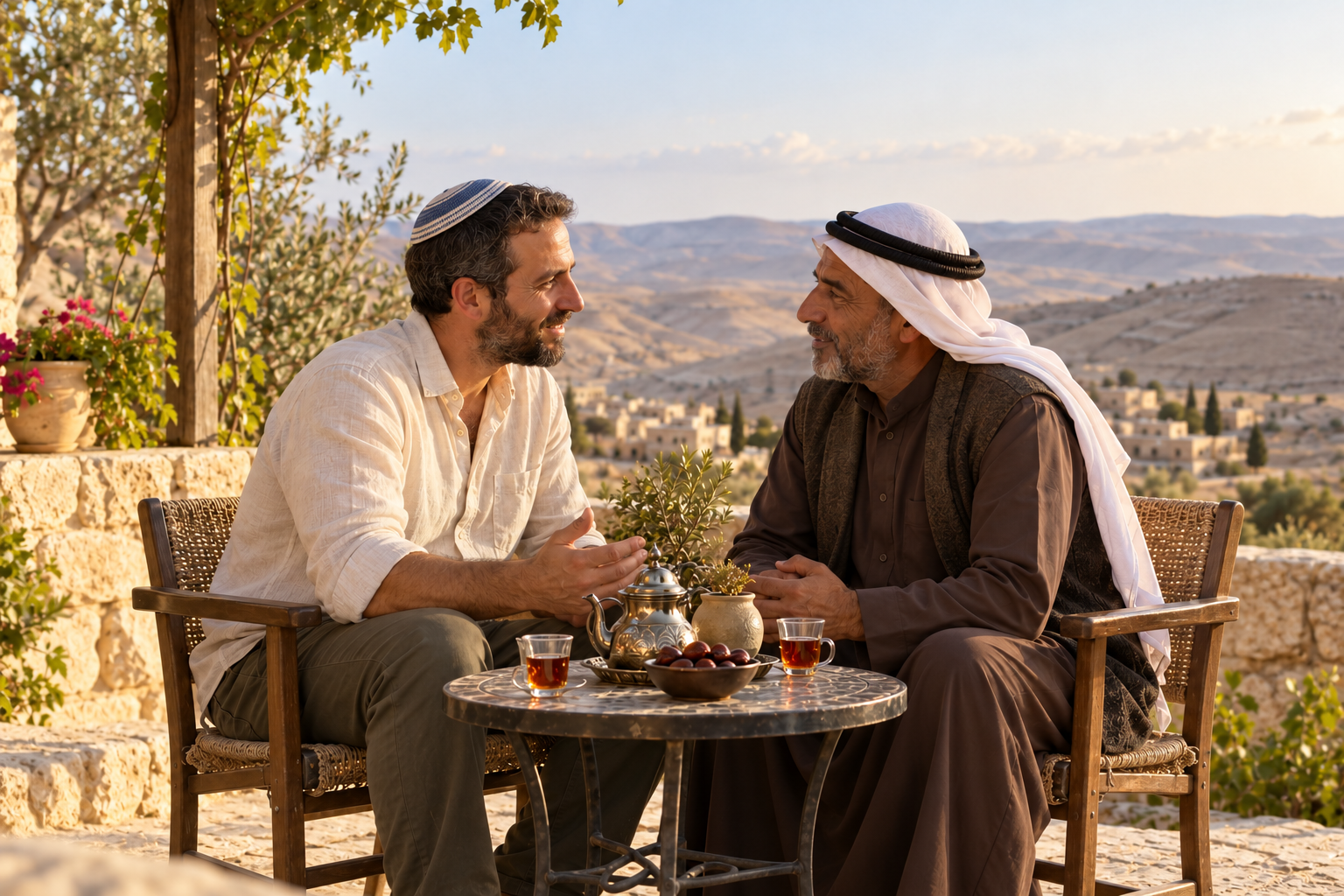
This story is about what happens when duty to a neighbor outweighs the instinct to save only yourself. It’s an American story, and about a country of immigrants built, at its best, on exactly that premise: that we are bound to each other across the very differences that could divide us. That morning, faith and background fell away. What remained was the American ideal: in crisis, we stand by each other.
This story has a bookend. The fall holidays begin with Rosh Hashanah and close three weeks later with Simchat Torah, the day we finish the Torah and immediately begin it again. In 2023, that day of completion and renewal fell on October 7th. What should have been a celebration of return became the deadliest day for Jews since the Holocaust.
Both September 11 and October 7 began the same way: an ordinary day shattered without warning, civilians targeted, a nation forced instantly to reckon with its own vulnerability. But where 9/11 drew the world into a shared grief, October 7th did something else. It split the world in two.
When the towers collapsed, America struck outward. Within weeks, American forces entered Afghanistan. Eighteen months later, in the name of sovereignty and security, we attacked Iraq, our leaders asserting that the nation would not absorb an attack without consequence. Hundreds of thousands died. We waged the war on false information.
We not only attacked, but we also changed as a nation. Congress passed the Patriot Act, giving the government additional power over its own citizens in the name of never again. Later, the first Trump administration continued the overreach with the so-called Muslim Ban.
Israel’s response to October 7th carried the same grammar of sovereignty and security, a nation asserting, as any nation would, that it would not simply absorb an attack on its people. But everything about it was magnified. The war in Gaza was called a genocide, and there was combat with Iran, Lebanon, and Yemen.

Questions of proportionality and overreach were argued in the International Court of Justice. Israel was judged by a world that mostly looked away from the questions raised by the US attack on Iraq and Afghanistan.
That debate, about where military necessity ends and overreach begins, is worth having, and Israelis themselves have it constantly, in their own press, their own courts, and soon in their own elections. What is not worth having is a version of that debate reserved for one country. If proportionality is the standard, it has to be a standard, not a leash.
Americans protested our attack on Iraq. Many understand it was a mistake built on a lie. And yet no American today walks down the street afraid to be recognized as American. No one scapegoats a nation of 340 million people for its government’s decisions. Iraq did not make being American a liability.
By contrast, October 7th gave a rebirth to anti-Semitism. In the past three years, anti-Semitism has surged from political groups that agree on almost nothing else. From the right, the oldest conspiracy in the Western world, the claim that Jews secretly control money and government, has found new audiences and new platforms, some with followings in the tens of millions. From the left, opposition to a government’s policies has too often collapsed into hostility toward Jews as a people, on campuses, online, in the language of entire movements.
Notice how the word “Zionist” itself is being used. This past August, Brad Lander, one of the sharpest Jewish critics of the Gaza war in American politics, a man who has called it a genocide and opposed further military aid to Israel, showed up to a protest against Hindu Nationalism. His politics on Gaza were closer to the crowd’s than to mine. He was run out anyway, the moment they learned he still calls himself a Zionist and believes Israel has a right to exist as a Jewish and democratic state. “The only good Zionist is a dead Zionist,” they shouted in his face. He wasn’t failing a policy test. He was failing an existence test.
You can hear the same test administered from the other direction. Guests on Tucker Carlson’s show warn about “Zionist billionaires” secretly running the American economy and government. Candace Owens, with an online audience in the tens of millions, has suggested Israel was behind the JFK assassination and calls anyone who names that antisemitism a pusher of the “Zionist agenda.” Strip the word “Zionist” out of either sentence and you’re left with the oldest accusation in history: the hidden Jewish hand pulling the strings of money and government. Put it back in, and somehow it passes for commentary.
I’m not going to relitigate Zionism or Palestinian rights. Reasonable people, Jews included, land in very different places on that question. Here’s what isn’t in dispute: Lander didn’t get run out of that protest for a policy position. Owens and Carlson’s audiences aren’t being asked to debate policy. In both cases, the argument has quietly become about who is allowed to exist rather than what anyone believes. Whatever you think about the conflict itself, the moment the target shifts from a policy argument to attacking a people, we’re not in a political debate anymore. We’re back in the old anti-Semitic canard.
So what do we do when the world keeps applying a test to us that it applies to no one else? We stop shaping ourselves to pass it. And I want to go back to Abe Zelmanowitz, because I think we’ve been telling his story incompletely for twenty-five years.
We tell Abe’s story proudly. It’s a retrospective on Jewish heroism. Why is this the story that we reach for out of everything that happened that day? The writer Dara Horn has a name for the pattern. Her book on the subject is called People Love Dead Jews, and her argument is uncomfortable because it’s true: we are far more at ease honoring Jewish sacrifice, Jewish martyrdom, Jewish disappearance, than we are making room for Jews who are simply, insistently, visibly here. Abe’s choice was noble. It was also the last thing he ever did. If the only stories we tell about Jewish courage end in a stairwell, we have taught ourselves the wrong lesson from a true story.
Because here is what nobody needed Abe to die to prove: that a Jew can be loyal, can be brave, can love a neighbor across every difference that’s supposed to divide them. He proved that with his life, not by losing it. The tragedy is that losing Jewish lives is the part we remember.
Sarah Hurwitz writes about this from the other direction. For a generation, many of us were raised to hold our Judaism lightly, quietly, almost apologetically, a private matter, folded up small enough not to take up too much room in a public life. That instinct made sense once. It does not serve us now.
But I want to be careful here, because the answer isn’t simply doing more Jewish things. A kippah, a mezuzah, a blessing said out loud, these matter, and I believe in all of them. But Judaism was never only a set of practices you perform. It’s a posture toward the world, and the posture is what’s being asked of us right now.
Being Jewish, not just doing Jewish, means we don’t wait quietly for someone else to notice what’s happening to us. It means that when a university lets its Jewish students get harassed out of a classroom and calls it free expression, we don’t accept the euphemism. We demand the same protection every other student on that campus is entitled to, and we say so by name, in public, without hedging.
When a mayor answers an attack on Jews or a synagogue with careful, cautious language instead of plain condemnation, we don’t let the caution pass for adequacy. We hold our leaders to account, loudly, because asking to be protected is not a favor we’re requesting. It’s a right we already have.
That is the charge I want to leave you with this morning, on a day that asks us to open the Book of Life before it’s sealed. Not only: care for your neighbors, though we should. Not only: wear the kippah where it can be seen, though you should do that too.
Refuse to be quiet about what we are owed.
Refuse to be grateful for mere tolerance when what we are entitled to is protection.
Refuse to let anyone, whatever their politics, decide for us what kind of Jew is allowed to take up space in this country.
Refuse a verdict on Israel, or on us, that no other people would be asked to sit for.
Refuse the double standard. Refuse the excuse. Refuse the silence that is asked of us.
Not our deaths. Not our disappearance. Not the stories that end in a stairwell. Our refusal is what proves every lie about us wrong.
We are still here. We are not hiding. We are not asking permission.
Shanah tovah.
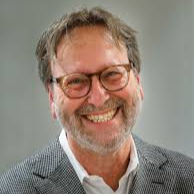
Rabbi Evan J. Krame
If this reflection resonates with you, consider sharing it on social media—or simply take a moment to reflect on how you can create a better community.