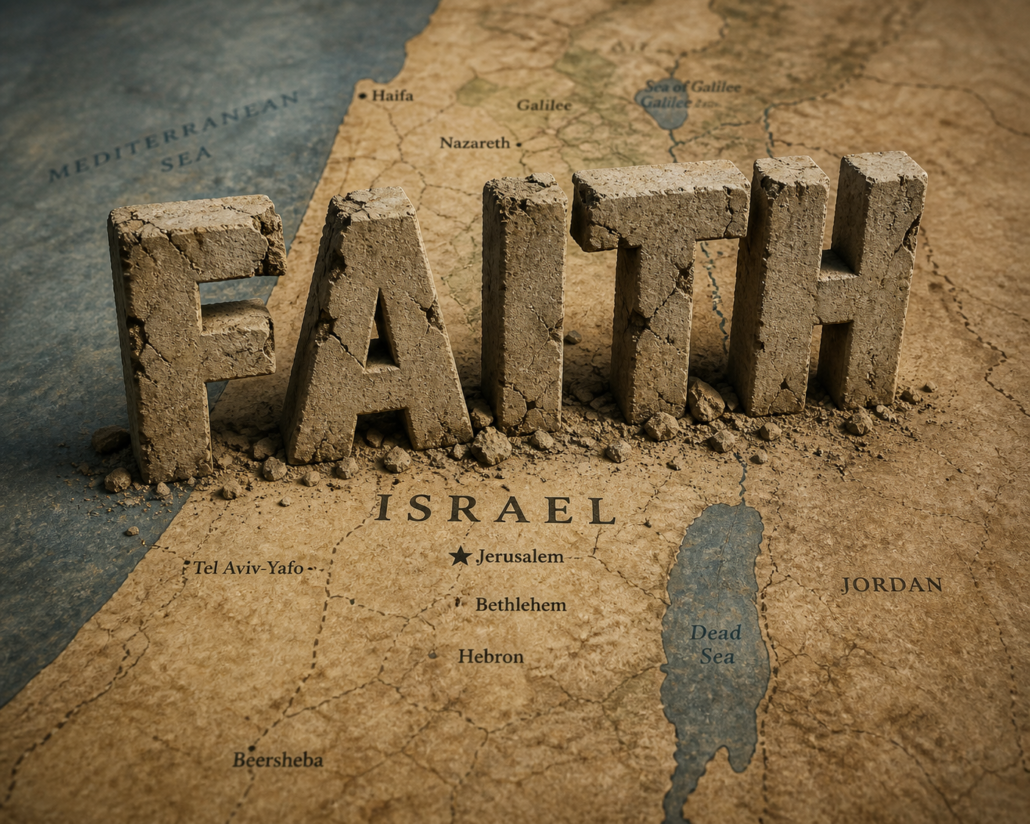
There is a particular kind of ache that comes with faith. Not the doubt of God’s existence, but the doubt of God’s promises in the face of how we actually live. The Torah tells us in Leviticus, “You shall observe My laws and faithfully keep My rules, that you may live upon the land in security.” I’ve recited that line, taught it, trusted it. And then I look at our world, at Israel, at Palestinians, at the endless cycle of violence done in the name of “security,” and that word starts to tremble.
I know the story we tell ourselves. We have been attacked, expelled, and massacred. Hebron in 1929. The War of Independence. 1967. 1973. Suicide bombings. Rockets. Knives. Tunnels. A people does not walk away from that history unmarked. So when Jews say, “We must be safe, never again vulnerable,” I understand it in my bones. There is a mitzvah to guard life. There is nothing holy about letting yourself be murdered.
And yet.
Somewhere along the way, “security” became a magic word that silences questions. If we call it security, then checkpoints, bombings, home demolitions, expulsions all become inevitable, regrettable, but necessary. We say, “We had no choice,” as if history and fear have closed all doors but one. I hear that, and another word from the verse whispers in my ear.
The Hebrew says, v’yishavtem al ha’aretz lavetach. We usually translate la’vetach as “in security.” But betach is also “sure.” Certain. Confident. To live la’vetach is not only to be safe; it is to be sure. And that’s where my faith‑fueled angst tightens. What, exactly, are we so sure of?
Are we sure that our story is the only one that matters? Are we sure that every Palestinian is a threat waiting to happen? Are we sure that more force will finally bring the quiet we crave? Are we sure that God’s promise of dwelling “in security” was meant to authorize whatever we decide to do in order to feel less afraid?
I hear the verse another way. Perhaps “you shall live upon the land in security” is not a guarantee of calm borders, but an invitation to a different kind of certainty. Not certainty in our own righteousness, but certainty that the land is not ours to do with as we please. Certainty that God’s laws—about justice, the stranger, the poor, the image of God in every face—do not get suspended when someone says “security concern.”
I find myself caught between two truths. One: Jews have real enemies, real trauma, real reasons to defend ourselves. Two: in defending ourselves, we are fully capable of wounding others, and ourselves, in ways the Torah cannot bless. My anxiety lives in that narrow place where God’s promise and our practice don’t line up.
I wish I could say, “Here is the solution. Here is the policy that will finally marry Torah and security.” I don’t have that. What I do have is a stubborn refusal to call every act of power “Torah” just because it keeps us safer for a night. And I have a lingering hope that God’s promise of betach is not about perfect safety, but about a way of being in the land that is less about being sure we are right, and more about being sure we are still answerable to something beyond ourselves.
Maybe that is the only kind of security we can honestly pray for right now.
Rabbi Evan J. Krame
If this reflection resonates with you, consider sharing it on social media—or simply take a moment to reflect on how you can create a better community.