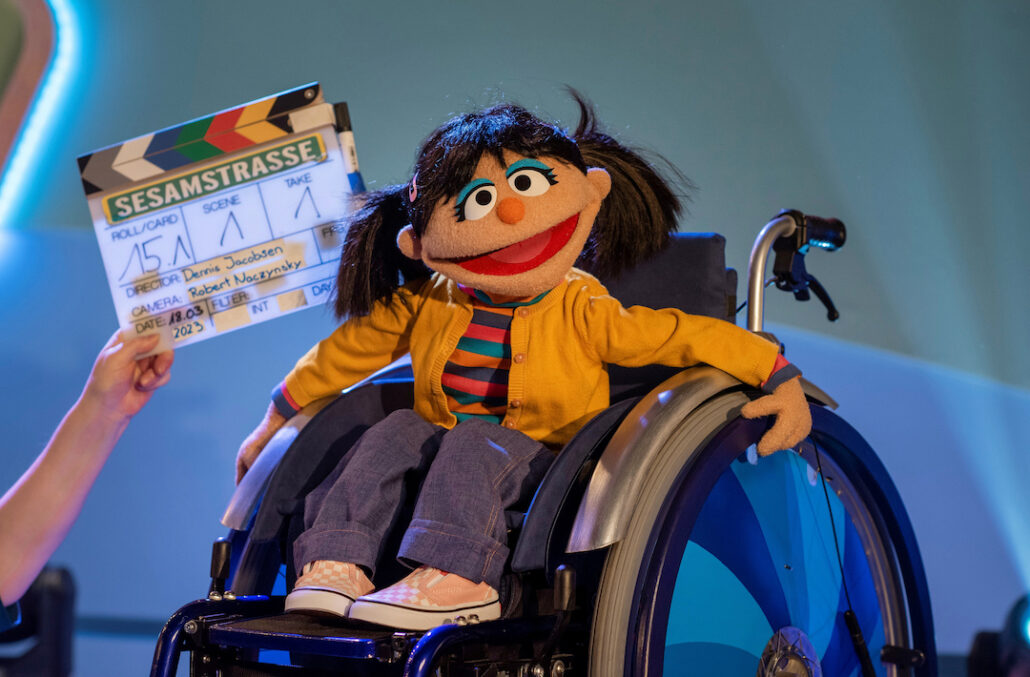
My first job was at a recreational program for children with other abilities, a day camp that operated each summer at Lido Beach, New York. One year, a film crew arrived to film my group during pool time. Years later, I saw myself in a Sesame Street segment, splashing about with my campers. The crew had captured something simple and profound: the normalcy of children at play. Though the children were described as disabled, the segment affirmed what I already knew, that each person, created by God, carries irreducible potential for holiness.
That memory makes the Torah’s explicit prohibition on priestly service for people with disabilities all the more difficult to bear. “No one at all who has a defect shall be qualified: no man who is blind, or lame, or has a limb too short or too long” (Lev. 21:18). Later commentators not only affirm the prohibition but compound its harshness, arguing that it would be shameful for any person with a disability to present an offering at the Holy of Holies.
The 17th-century commentator Shlomo Ephraim Luntshitz, known as the Kli Yakar, went further still, framing physical disability as the consequence of moral failure: “Therefore, I say that the ancients who were experts in the sciences knew about every blemish that would develop in a person before it happened, due to what sin they saw in him. For example, if they knew he accepted bribes, they knew he would eventually go blind. And if they saw in him a haughty walk, they knew that he would eventually suffer a broken leg.”
This is not commentary. It is inhumanity disguised as scholarship.
The Torah’s denigration of persons with disabilities, and the apologetics of its commentators, are genuinely disheartening. Our texts and traditions do not always comport with our highest ideals: caring for the stranger, loving our neighbor, aspiring to holiness. The tension is real, and it demands honest reckoning rather than pious avoidance.
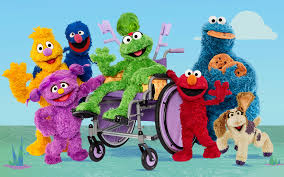
Our challenge, then, is to uphold the dignity of every one of God’s creations while refusing to let ancient prejudice masquerade as timeless truth. The Holy of Holies and the hereditary priesthood belong to history. So too must the assumptions that undergirded them. No Sesame Street segment can undo the full weight of cultural bias, and no reverence for sacred text should require us to sanctify its cruelties.
We are called instead to treat Torah’s prohibitions against persons with disabilities as we should treat slavery and misogyny: as relics of a world we are obligated to surpass. The Torah I read does not demand that we live in the reverberations of the ancient world’s fear and confinement. It compels us to move beyond them toward a holiness measured not by physical perfection, but by the dignity we extend to every human being.
Rabbi Evan J. Krame
If this reflection resonates with you, consider sharing it on social media—or simply take a moment to reflect on how you can create a better community.