
The people started to complain. They had places to live and food to eat, but they were not satisfied. They lost faith in their leaders and their institutions. They no longer trusted the promise of the land. They felt adrift. Their voices rose in bitterness, all of them but two. The sacred responsibility of democratic leadership is to respond with wisdom and humility, to form a more perfect union.
This story is both ancient and current. Dissatisfaction can undermine the sacred work of sustaining a covenantal relationship. Whether in the Israelite camp or the American experiment, the effort to form a more perfect union has stumbled again and again when people are more prone to find fault than faith. The critical element is how the leadership reacts.
In the Torah, the people were dissatisfied with the manna, although it was rich, nourishing, and satisfying. Numbers 11. They demanded something better to eat. Their complaining angered God. Moses intervened with God through prayer, although that did not stop the complaints. Moses, exhausted by the people’s demands, turned to resolve the unrest. To respond, God advised Moses to choose seventy elders to share the burden. With their appointment, each received a measure of the Divine Spirit and began to speak in ecstasy.
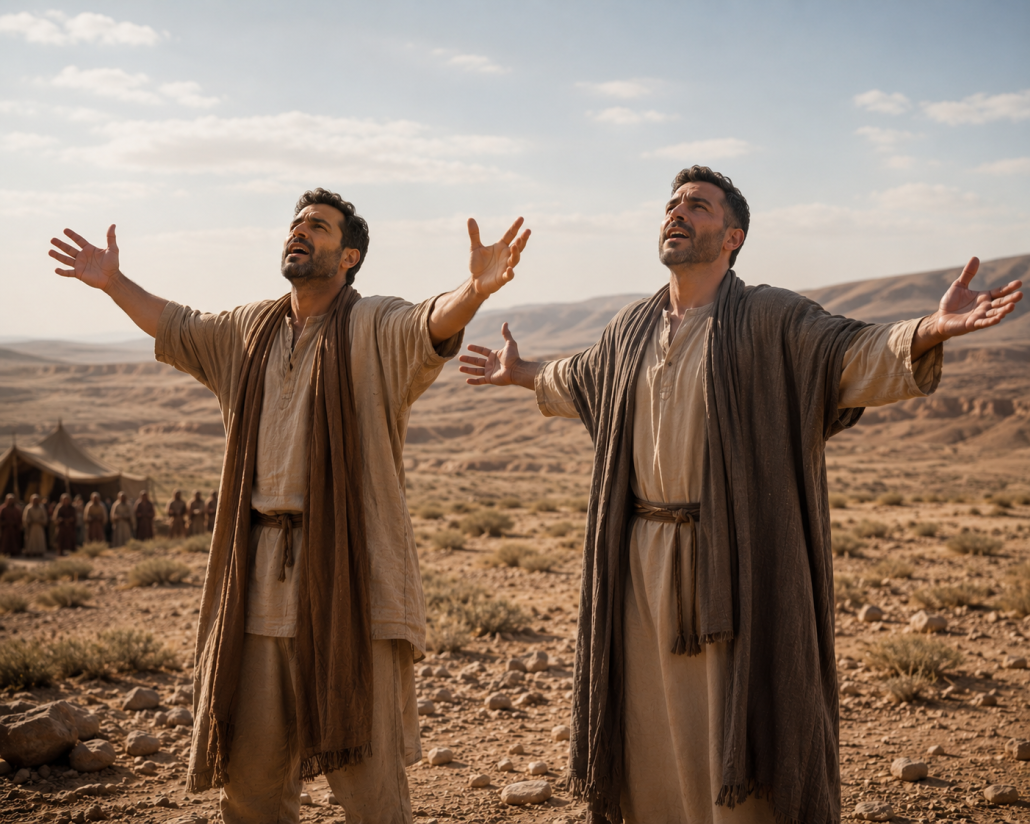
Some of that spirit settled on two other men: Eldad and Medad. Unlike the chosen elders, they prophesied in the camp. Joshua begged Moses to silence them, fearing their challenge to the authority of leadership. Moses refused. If only all God’s people could be prophets, he said, inspired by God.
From this scene, we learn something about leadership in a covenantal community. Trust the people. Allow many voices. Anticipate that any and all of us can be moved by godly principles. Even the challenge to authority can be holy.
Other kinds of leadership take a different road. There are rulers who, when the people complain, do not pray. They do not share power with elders. They hush the Eldads and Medads. They do not say, “Would that all God’s people were prophets.” They say instead, “There is only one voice that matters, and it is mine.”
That is not the model handed down to us, not from Sinai and not from Philadelphia.
The founders of the American Republic read the Bible closely. They knew that the children of Israel did not seek a king at first. When they finally demanded one, the prophet Samuel warned them what would follow: a ruler who would claim their sons for his armies, their daughters for his service, their fields and vineyards for himself. Power without covenant becomes appetite.
Still, there are people who crave imperious leaders. Some have been deluded into believing that a single strong leader without opposition will solve their problems.
The genius of the American founding was to resist that urge. The framers drew from the well of Exodus: covenant, law, the consent of the governed, and the conviction that no person stands above the principles that bind a community together. Benjamin Franklin, leaving the Constitutional Convention, was asked what kind of government had been created. “A republic,” he answered, “if you can keep it”.
Keeping it means making room for other voices. It takes Moses’ wisdom to enlist seventy elders to share the burden of governing. It takes Moses’ humility to permit Eldad and Medad’s ravings not as treason but as testimony.
When leaders respond not with rage but with a sense of shared responsibility, trust expands and authority widens. As a collective, the camp survives and moves forward.
Nations that fear complaint do not flourish. They harden. They build walls not just to keep enemies out, but to keep their own people in. They mistake silence for peace and compliance for loyalty. The quiet they enforce is not harmony. It is the hush of suppression.
Moses knew better. A leader who cannot bear the sound of his people crying out has already lost them. A leader who cannot allow for disparate voices is deaf to the responsibility of leadership. Only with wisdom and humility can leadership help us strive toward a more perfect union.
Rabbi Evan J. Krame
If this reflection resonates with you, consider sharing it on social media—or simply take a moment to reflect on how you can create a better community.