I have spent much of my adult life working with laws. As an attorney, I help people arrange their affairs with some confidence that the rules will hold. As a rabbi, I explore what our tradition teaches about our Jewish legal obligations to each other. Lately, I find myself asking a question that troubles both parts of my professional life: What happens when those entrusted with enforcing the law believe they are entitled to ignore it?
The story of Noah offers an unsettling answer.
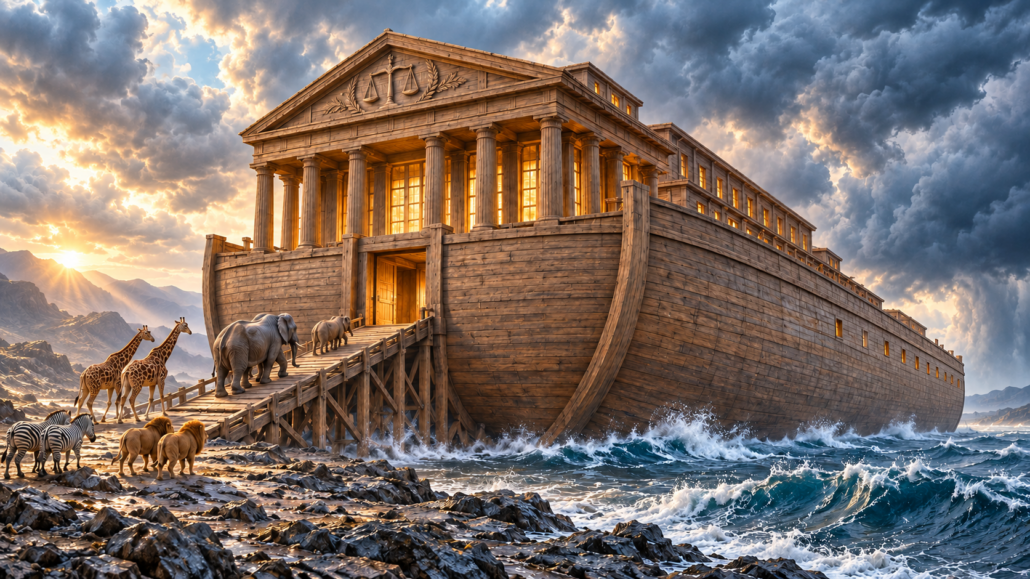
Before the rain begins, Torah describes a world already poisoned by corruption. “The earth became corrupt before God; the earth was filled with lawlessness” (Genesis 6:11). God sees how thoroughly corruption has taken root. The coming flood will destroy a world whose inhabitants have already made it dangerous to live in.
We tend to remember the animals marching two by two. The diagnosis of humanity deserves at least as much attention. Greed consumes whatever it can acquire. Violence determines who gets what. People with power have little reason to restrain themselves when no one can hold them accountable. Reading Noah today, I find the world before the flood uncomfortably familiar.
Greed and autocracy are metastasizing. The appetite for wealth feeds the appetite for power. Once acquired, power can be used to accumulate more wealth and keep people from asking inconvenient questions. Eventually, corruption becomes the norm. We lower our expectations, adjust to the abuses, and congratulate ourselves for being realistic.
After the flood, God establishes a covenant with Noah and his descendants in Genesis 9. Rabbinic tradition identifies seven basic obligations for humanity, known as the Noahide laws. Among them are prohibitions against idolatry, murder, sexual immorality, and theft. One affirmative obligation deserves more attention: establish courts of justice. Humanity needs a way to hold people accountable.
Reflecting on those obligations, I realized how much depends on that last requirement. We can declare that stealing and killing are wrong. But what protection does that offer if the thief controls the government or the sadist commands an army? A prohibition means little to someone confident it will never be enforced against him.
Today, we have laws enough to fill libraries. We have constitutions, statutes, regulations, and judicial decisions. Yet all that accumulated law depends upon a shared commitment to be bound by it. A society can survive people breaking its laws. It is far harder to survive leaders claiming the right to decide when the law applies to them.
The autocrat wants that exemption and believes that courts are acceptable as long as they deliver favorable decisions. Officials are useful as long as they demonstrate personal loyalty. The law becomes something to impose on opponents and negotiate away for friends. Those who object are treated as obstacles to the leader’s greatness.
Here, I also hear a contemporary warning in the prohibition against idolatry. We may no longer bow before a golden statue, but we can still place a human being beyond criticism. We can excuse cruelty because we admire strength. We can forgive dishonesty because we like the promised result. We can become so devoted to a leader that our own moral judgment falls silent.
Then we help create the very lawlessness we claim to oppose.
Noah’s story asks us to recognize corruption before it becomes the accepted condition of life. That requires defending independent courts, insisting that public officials answer for their conduct, and refusing to excuse abuses committed by people whose politics we share. Our commitment to the rule of law is tested most honestly when the law restrains someone we wanted to succeed.
I do not want to retreat into an ark while the world around me deteriorates. I want us to preserve a world in which our children can live with confidence that power has limits and their lives have value.
We know where Noah’s story leads. We also have the benefit of its warning. We can demand accountability while there is still time to repair the damage corruption has done.
We should not have to wait for the rain.
Rabbi Evan J. Krame
If this reflection resonates with you, consider sharing it on social media—or simply take a moment to reflect on how you can create a better community.