As Americans, we sing, “This land is your land, this land is my land.” The song carries a promise: the nation would be shared by the many peoples who would arrive on its shores. In practice, we failed to keep the promise. Native peoples were uprooted and dispossessed. Wave after wave of immigrants met bigotry and hatred. Despite our forefathers’ iniquities, we kept reaching for a more perfect union.
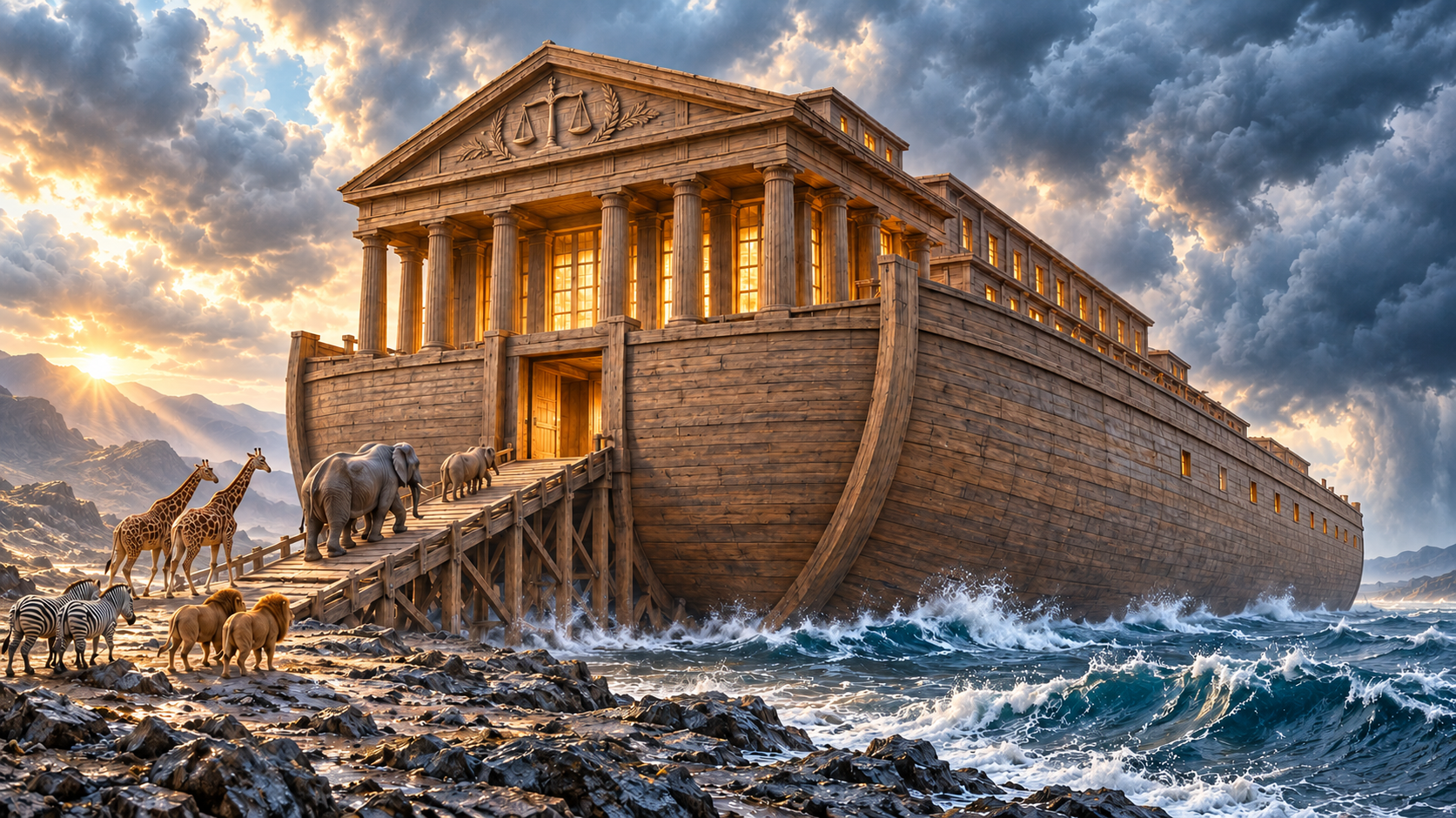
In the Torah portion Lech Lecha, Abraham arrives in Canaan. God promises, time and again, to give the land to Abraham and to his descendants for all generations. That promise was tested time and again. Famine drove Abraham down to Egypt. His descendants would be enslaved there for centuries. Babylon burned the Temple and carried the people into exile. Yet within a lifetime, as Jeremiah foretold, the exiles left Babylon and trekked home to rebuild.
For more than three thousand years, Jews have lived in this land. When conquerors drove us out, some always stayed, and others always found their way back. Scattered across the globe, our ancestors faced Jerusalem in prayer three times a day and closed every Seder with “Next year in Jerusalem.” That unbroken attachment is the soul of Zionism. Zionism did not invent the Jewish bond to the land. It gave that bond a political address.
Last week in Belfast, former President Obama spoke about Israel. To his credit, he acknowledged that “the Jewish people, for millennia, were oppressed, discriminated against, killed,” and that they “understandably sought a refuge.” Then he added: “What is also undeniable is that they took land off people and they were excessive. And those people understandably said, ‘This is injustice, and I want my land back.’”
Notice the story being told. Jewish history begins with persecution in Europe and ends with refugees taking someone else’s home. Israel becomes a lifeboat that ran aground on Arab land. That story leaves out Abraham. It leaves out David’s Jerusalem, the Maccabees, and the Jews who never left. It leaves out the hundreds of thousands of Jews from Iraq, Yemen, and Morocco who arrived not from Europe at all, but from Arab lands that no longer wanted them.
Jews start the history of Israel with Abraham settling in the land. Israelis are not colonizers. A colonizer serves a mother country. The Jews had no mother country but this one. Much of the land of the early Zionist settlements was purchased, often at inflated prices, from Arab landowners. The Arabs of Palestine were not indigenous peoples swept aside by a foreign empire, à la the American experience. The Jews of Europe sought a safe home, not a battlefield. In 1919, Chaim Weizmann and Emir Faisal signed an agreement envisioning Jews and Arabs building the region together. That hope did not hold. Few Arab leaders could sustain coexistence.
Today, American public discourse is challenged by political expedience and intellectual dishonesty. Saying that Israel “took land” is easy. It fits a familiar American story of conquest and guilt. But it’s only half the story, and when a former president tells it, it lands with full weight.
Lech Lecha holds a lesson for this moment. The Torah never pretends the land was empty. “The Canaanite was then in the land,” it tells us, as Abraham first arrives (Genesis 12:6). A chapter later, Abraham’s herdsmen and those of his nephew Lot are quarreling over pasture. Abraham holds God’s promise to the entire land. He could have pressed his claim. Instead, he says, “Let there be no strife between you and me, for we are kin. Is not the whole land before you? If you go left, I will go right” (Genesis 13:8-9).
Abraham’s confidence in his claim is what frees him to be generous. He does not need to deny Lot’s presence to secure his own. Nor would he have accepted a version of the story that erased him.
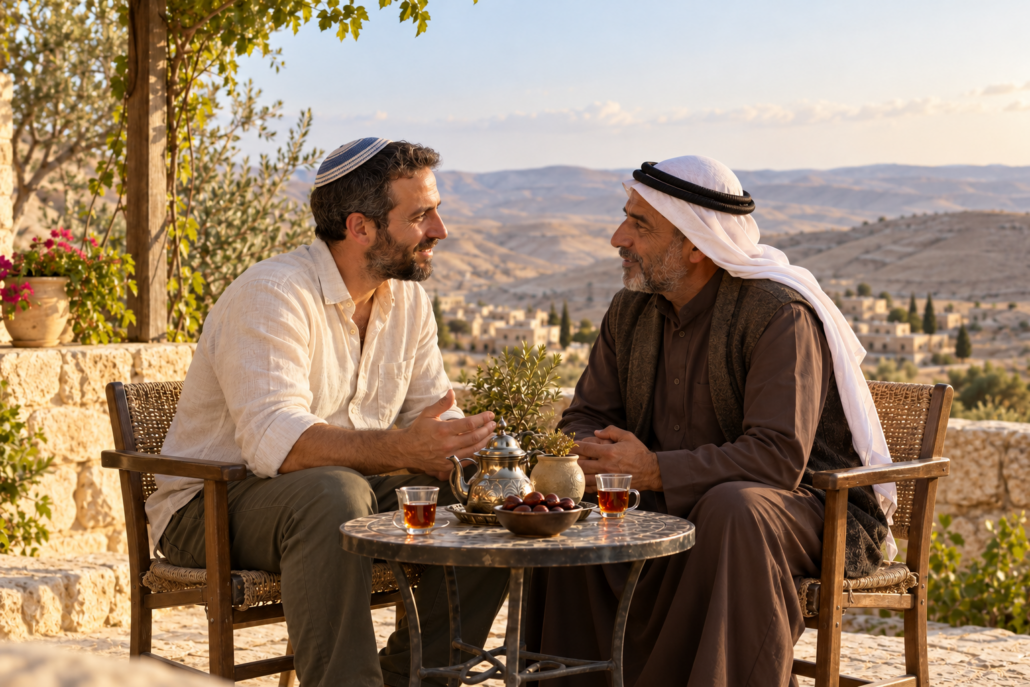
That is the stance we need now. We do not answer half-truths with half-truths of our own. We tell the whole story: that Jews are rooted in this land and never surrendered our bond to it; that others live there too, with hopes and grief of their own; and that no peace has ever been built by people who deny each other’s history.
The song places both lines side by side for a reason. This land is my land. This land is your land. Neither line is true alone. But telling the truth about history helps us build a better future.
Rabbi Evan J. Krame
If this reflection resonates with you, consider sharing it on social media—or simply take a moment to reflect on how you can create a better community.