People have always been obsessed with the state of their skin. The Torah’s concern with skin disease and our culture’s current obsession with aging share a hidden question: what do we do when the body begins to change and betray us? Both Leviticus and the longevity clinic whisper the same anxiety: when the body’s surface changes, does my place in the community change too? We must learn again that the depth of our being is more than skin deep.
In the Torah portion Tazria–Metzora, the person afflicted with skin disease is sent outside the camp. Not just distanced but removed. Their skin has become a disruption, something that unsettles the social and spiritual order. The Torah doesn’t treat this as a medical issue. It is relational, communal, and spiritual.
When healing comes, it is not self-declared. The priest must say: You can return. Which means the real question is not only, “Are you healed?” but “Are you seen as someone who still belongs?”
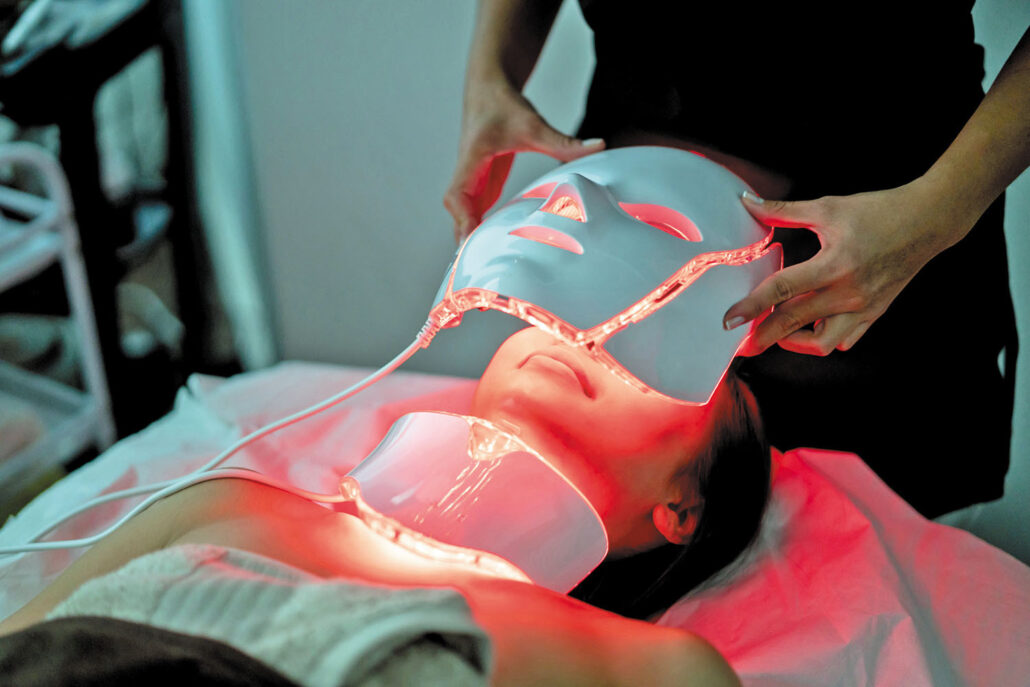
We no longer stand outside the camp. We sit in waiting rooms for dermatologists, specialists, and longevity clinics, quietly examining our spots, lines, and sagging skin, or scrutinizing the numbers that now define us: BMI, HDL, A1C, VO2. Beneath the clinical language, the questions sound hauntingly familiar: Is this normal? Is something wrong with me? Can I be restored, not just physically, but to where I want to be in society?
We have traded hyssop and scarlet thread for serums and infusions. The ritual looks different. The anxiety does not.
We live inside a culture that relentlessly teaches us what a “proper” body looks like: youthful, firm, energetic, controlled. When our bodies drift from that template, we feel out of place, not just to others, but to ourselves. Beneath all the effort of peptides and full-body scans is a deeper discomfort: if my body no longer aligns with the ideal, has something about me fallen out of place?
The rabbis linked tzaraat to moral failure, citing lashon hara, arrogance, and envy. The body became a text reflecting something broken beneath the surface. We resist that framing today. We prefer science and data. And yet listen to how we talk about aging: lifestyle, discipline, optimization. If you had only lived differently… The language has changed. The undercurrent of judgment has not.
But here is where Torah offers a subtle, profound alternative. The goal is not perfect skin. It is to be in community. The rituals of Metzora are not cosmetic; they are communal. Torah teaches us how to bring a person back into connection, visibility, and a sense of belonging. You are not defined by what happened to your body. You are defined by the fact that you are still part of us.
Our culture, by contrast, has made the body itself the central project, something to preserve, enhance, even conquer. Aging becomes an adversary. Decline becomes failure. And in that framing, community becomes secondary.
A life built around self-optimization is ultimately a solitary one. If there is no “camp,” there is nowhere to return to. If no one says “You are still one of us,” then healing, no matter how medically successful, remains incomplete.
Reading Tazria–Metzora now, I hear a different invitation — not How do I prevent my body from changing? But when it does, who will still sit with me?
Maybe the work is not to eliminate vulnerability, but to build communities that can hold it. To become priests for one another: not in diagnosing, but in witnessing; not in policing boundaries, but in blessing those who cross them.
We already know how. In the Jewish tradition, the mourner retreats to their home and withdraws from the community. Shiva is a quiet presence at the door, reminding you that despite your loss, you’re still inside the camp.
Illness, aging, and mourning can leave us feeling isolated and cast out. The challenge is to respond to one another with a deeper welcome. Torah urges us to look beyond the surface, beyond the skin.
Rabbi Evan J. Krame
If this reflection resonates with you, consider sharing it on social media—or simply take a moment to reflect on how you can create a better community.